
How to Care for Your Dentures: Cleaning, Storage, and Long-Term Comfort
Getting dentures is a big step toward restoring your ability to eat, speak, and smile with confidence. But dentures aren’t set-it-and-forget-it. They require regular care to stay clean, fit well, and last as long as possible.
If you’re wondering about the best way to clean, store, and maintain your dentures—or even how long they’re expected to last—you’re in the right place. This guide covers daily cleaning, overnight storage, fit adjustments, and what to watch for as they age.
Let’s start with the basics.
Cleaning Your Dentures Every Day
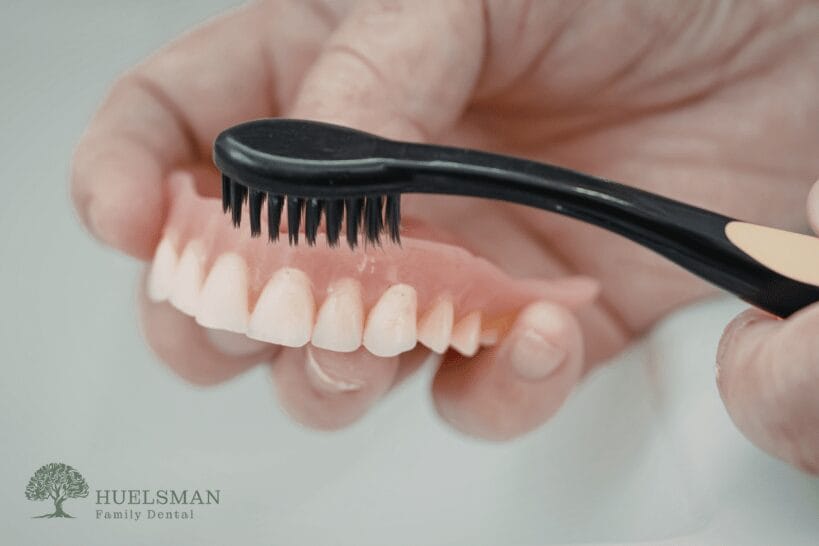
Dentures collect food, plaque, and bacteria throughout the day, just like natural teeth. That means daily cleaning is a must—it prevents bad breath, stains, and irritation. It also helps dentures in Worthington last longer.
Each night, remove your dentures and clean them thoroughly. Use a soft-bristled brush made specifically for dentures and a non-abrasive cleanser designed for the material your denture is made of.
Avoid whitening toothpastes and household cleaners like bleach or vinegar. These can damage or wear down denture materials, affecting their fit and appearance.
Be careful during cleaning. Dentures may be durable in your mouth, but they’re fragile in your sink. Hold them over a folded towel or a basin of water in case you drop them.
And don’t forget about your mouth—use a soft toothbrush or gauze to clean your gums, tongue, cheeks, and the roof of your mouth. Keeping the rest of your mouth clean protects your oral tissues and reduces the risk of irritation or infection.
Related article: Understanding Periodontal Maintenance: A Guide for Worthington, Ohio, Residents
Storing Dentures Safely Overnight
Dentures need to stay moist. Letting them dry out overnight can cause them to warp, crack, or feel uncomfortable the next day. That’s why proper storage matters as much as cleaning.
After brushing your dentures, place them in a clean container filled with either water or a denture-soaking solution. The container should have a lid and sit in a safe place—away from where it could be knocked over or mistaken for a toy by curious pets.
Here are a few things to keep in mind while storing them overnight:
- Don’t use hot water to soak dentures. It can cause them to lose their shape.
- Avoid soaking solutions unless your dentist recommends one. Not all materials respond well to the same ingredients.
- If your dentures contain metal parts, check the labeling or ask your dentist before using any chemical soak.
- Always rinse dentures with water before putting them back in your mouth in the morning.
Sleeping without your dentures also gives your gum tissue time to rest and reduces your risk of oral infections, such as denture stomatitis.
Getting Adjustments and Regular Checkups
Dentures rarely stay perfect forever. Your gums change shape over time—especially in the months or years after losing teeth—which causes dentures to shift or feel loose. Even small movements can lead to irritation or sore spots.
This doesn’t mean something went wrong. It just means it’s time for an adjustment.
If your dentures start feeling loose, clicking while you talk, or causing discomfort when you chew, call your dentist. They may recommend a reline, which reshapes the surface that rests against your gums, or a smaller adjustment to relieve pressure points.
In general, make it a point to see your Worthington dentist at least once or twice a year, even if your dentures feel fine. A fit that feels “okay” to you may still be causing gum damage or bone loss that you can’t detect on your own.
During these checkups, your dentist will also:
- Check for signs of irritation or infection in your soft tissues
- Inspect your denture for wear, cracks, or weakening
- Make minor repairs as needed
Routine maintenance helps you avoid bigger issues later, like fractured dentures or gum damage that requires extensive reshaping.
Signs It’s Time to Replace Your Dentures
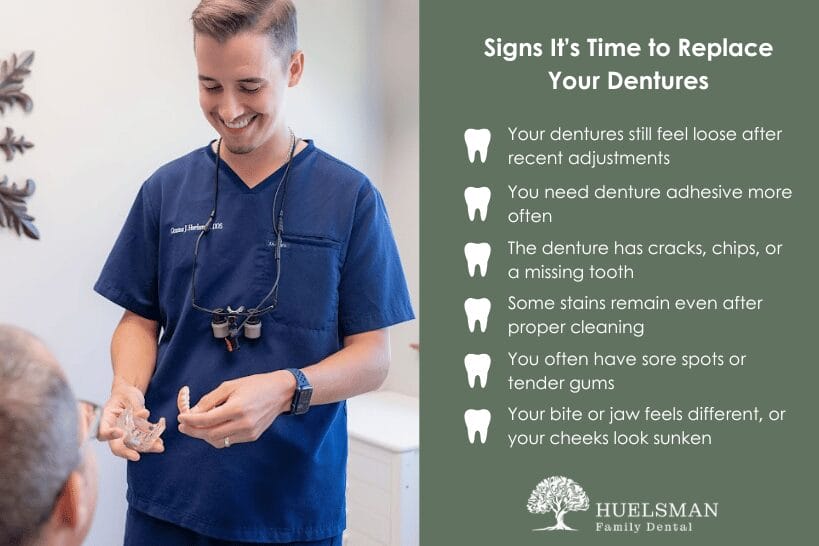
Most dentures need to be replaced every 5 to 7 years. You might stretch that timeline slightly with excellent care and regular adjustments, but dentures do wear down and become less effective over time. When they do, they can cause more harm than good.
Take note if you experience any of the following:
- The dentures feel increasingly loose even after a recent reline or adjustment.
- You’re using adhesive more often than before.
- Cracks appear, or a tooth on the denture chips or falls off.
- You can’t remove certain stains, even with proper cleaning.
- You’re experiencing frequent sore spots or tenderness in your gums.
- Your jaw line or bite feels different, or your cheeks look sunken in.
These are strong indicators that your dentures are no longer serving you—and may be causing discomfort or poor function. Getting a new set helps restore your bite, maintain your facial structure, and prevent oral health complications down the line.
Thinking About Implant-Supported Dentures
If you’ve struggled with loose dentures, sore gums, or you simply want a more permanent option, implant-supported dentures could be worth exploring.
Unlike traditional dentures that simply rest on your gums, these attach to dental implants—small posts placed in your jawbone. The implants act like roots, keeping the denture stable and secure.
Common options include:
- Bar-retained dentures that clip to a thin bar connected to implants.
- Snap-in dentures that connect to individual implants using ball or locator attachments.
Both types offer a predictable fit with no slipping or shifting. They also reduce the need for adhesives and prevent the bone loss that conventional dentures do not address.
People generally turn to implant-supported dentures if:
- They’ve needed multiple relines, and the fit still doesn’t hold.
- Dentures are affecting their confidence when eating or talking.
- They want to eat more types of food without worrying about dislodging dentures.
- Their jawbone still has enough density to support implants.
Keep in mind, implants are a bigger commitment upfront. They involve surgery and a healing process that takes several months. Still, the long-term stability and comfort often outweigh the time and cost for many users.
Key Takeaways
- Clean your dentures daily with a soft-bristled brush and non-abrasive cleanser—avoid regular toothpaste or household cleaners.
- Store dentures in water or a dentist-recommended soaking solution overnight to prevent drying, warping, and cracking.
- See your dentist once or twice a year for checkups, adjustments, and relines—even if your dentures feel fine.
- Replace your dentures every 5 to 7 years, or sooner if you notice looseness, cracks, discomfort, or changes to your bite.
- Implant-supported dentures offer a more stable alternative for those frustrated with the fit or feel of traditional dentures.
Comfort Starts with Consistent Care
It’s important to take care of your dentures, as doing so can make a big difference in how they feel, how long they last, and how well they function day-to-day.
If you start to notice changes in fit, comfort, or appearance, don’t wait until there’s a bigger issue. A reline, adjustment, or timely replacement can save you from unnecessary pain and expense.
A little upkeep goes a long way. Take a few minutes each day for care, and make yearly checkups part of your routine. Your dentures—and your mouth—will thank you.