
5 Common Denture Problems & How to Fix Them
If you wear dentures, you already know they can be life-changing. They help you eat, speak, and smile with confidence after losing teeth. But let’s be honest, dentures aren’t always perfect. Sometimes they rub in the wrong spot, slip at awkward moments, or just don’t feel quite right.
The truth is, most denture wearers run into issues at some point. You’re definitely not alone if something feels off. The even better news? Most common denture problems have simple fixes, and you don’t have to just put up with discomfort.
What Are Dentures?
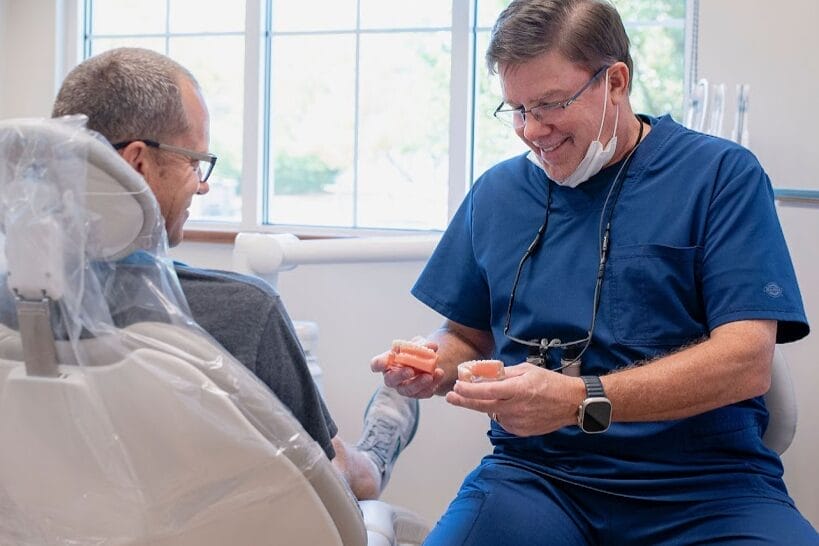
Dentures are removable replacements for missing teeth. If you’ve lost all your teeth on the top or bottom of your mouth, full dentures can restore your smile. If you still have some natural teeth remaining, partial dentures can fill in the gaps while working with what you have.
Today’s dentures look more natural than ever and are made from durable materials designed to hold up to daily use. They’re a practical, affordable option for people dealing with tooth loss from decay, gum disease, injury, or other oral health issues.
That said, getting used to dentures takes time. Your mouth needs to adjust to having something new in it, and that adjustment period can come with some frustrations. Knowing what’s normal and what needs attention from your Worthington dentist helps you get through this phase much more smoothly.
Related Article: What Type of Dentures Are Most Natural Looking?
The 5 Most Common Denture Problems We See
Over the years, we’ve helped countless patients work through denture problems big and small.
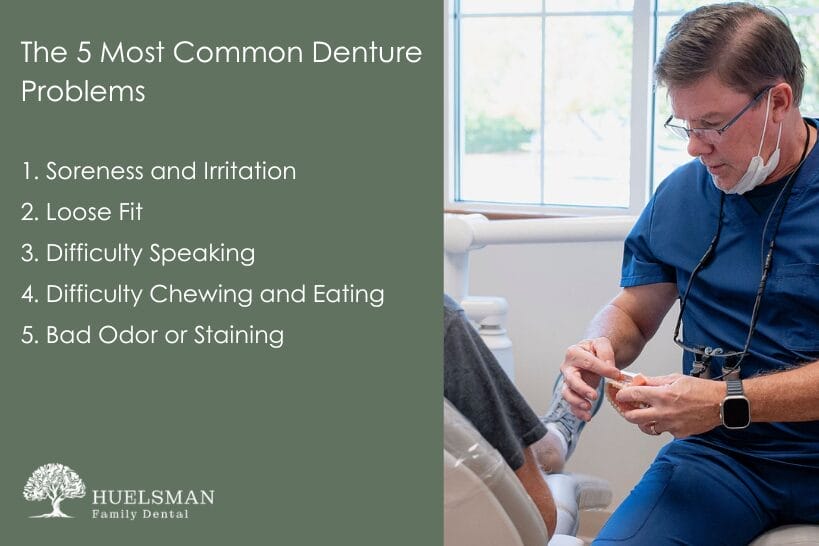
Here are the five issues that come up most often, along with what you can do about them.
1. Soreness and Irritation
This is probably the most frequent complaint we hear, especially from people wearing new dentures. Your gums aren’t used to having an appliance resting on them all day, and that friction can create sore spots, redness, or even small ulcers.
Why it happens: Dentures put pressure on your gum tissue. When they’re new, your mouth hasn’t built up any tolerance yet. Sometimes the fit isn’t quite perfect, or there’s a spot where the denture edge rubs against soft tissue.
How to fix it: First, don’t try to tough it out. Come see us so we can check the fit and make adjustments. In the meantime, rinsing with warm salt water can soothe irritated tissue. Give your gums a break by removing your dentures for a few hours each day, especially at night.
If you’re tempted to use over-the-counter numbing gels constantly, that’s a sign that something needs professional attention.
2. Loose Fit
Dentures that slide around or feel loose are more than just annoying—they can make eating and talking genuinely difficult. Many patients reach for denture adhesive to solve the problem, and while that can help temporarily, it’s not a long-term fix.
Why it happens: Your mouth changes over time, even after you’ve lost teeth. Bone loss in the jaw is common after tooth extraction, and as the bone shrinks, the ridge that supports your dentures changes shape. Weight fluctuations, aging, and general wear on the dentures themselves can also affect fit.
How to fix it: If your dentures are slipping, schedule an appointment with us. We can determine whether you need a reline (adding material to the base to improve fit), a repair, or completely new dentures.
Generally, dentures need to be relined every one to two years and replaced every five to seven years. Using excessive amounts of adhesive to compensate for poor fit isn’t the answer—it usually means it’s time for professional help.
3. Difficulty Speaking
Talking with dentures can feel strange at first. You might notice a lisp, find certain words harder to pronounce, or feel like your dentures click when you speak. This can be embarrassing, but it’s incredibly common with new dentures.
Why it happens: Your tongue and muscles are used to working with your natural teeth (or no teeth at all). Suddenly, there’s a new appliance in the way, and your mouth needs time to figure out how to work around it.
How to fix it: Practice really does help here. Try reading aloud to yourself for 15-20 minutes each day. Start slowly and focus on words that give you trouble. Singing along to music is another great way to train your mouth.
Most people see significant improvement within a few weeks. If speech problems persist beyond a month or two, the dentures themselves might need adjustment, so don’t hesitate to check in with us.
4. Difficulty Chewing and Eating
One of the main reasons people get dentures is to eat comfortably again. So it’s understandably frustrating when difficulty eating becomes a new problem. Chewing can feel awkward, food might get trapped under your dentures, or certain textures might seem impossible to manage.
Why it happens: Eating with dentures requires a different technique than eating with natural teeth. You have less biting force, and you need to distribute pressure differently to keep your dentures stable.
How to fix it: Give yourself time to adjust and start with soft foods like mashed potatoes, yogurt, scrambled eggs, cooked vegetables, and tender fish. As you get more comfortable, gradually introduce firmer foods. When you do eat, try to:
- Cut food into small, manageable pieces
- Chew slowly and use both sides of your mouth at the same time
- Avoid very sticky or extremely hard foods that can dislodge dentures
- Be cautious with foods that have small seeds or tough skins
Most people find that their eating abilities improve significantly over the first few months. If you’re still struggling after that adjustment period, let us know because the fit might need tweaking.
5. Bad Odor or Staining
Nobody wants to worry about bad breath or discolored dentures. Unfortunately, without proper care, dentures can develop odors and stains just like natural teeth. This isn’t just a cosmetic concern; it can also affect your overall oral health.
Why it happens: Bacteria, food particles, and plaque build up on dentures throughout the day. If they’re not cleaned thoroughly, this buildup leads to unpleasant smells and visible staining. Certain foods and drinks (coffee, tea, red wine, berries) can also discolor denture material over time.
How to fix it: Good oral hygiene is essential, even without natural teeth. Clean your dentures daily with a soft brush and denture cleaner—not regular toothpaste, which can be too abrasive. Soak them overnight in a denture solution to kill bacteria and keep them fresh. Don’t forget to clean your gums, tongue, and any remaining teeth as well. We recommend:
- Rinsing dentures after every meal
- Brushing them thoroughly at least once daily
- Soaking overnight in a denture cleaning solution
- Scheduling regular dental checkups so we can professionally clean your dentures and check for any problems
If odor or staining persists despite good hygiene habits, bring your dentures in. There might be microscopic cracks harboring bacteria, or it could be time for a replacement.

Your Dentures Should Work For You, Not Against You
Living with denture problems doesn’t have to be your reality. Whether you’re dealing with sore spots from new dentures, a loose fit from bone loss, or just need guidance on better care, we’re here to help you find solutions that actually work.
Remember that adjusting to dentures is a process. Some challenges are a normal part of that process, while others signal that something needs attention. The key is knowing the difference—and never hesitating to reach out when something doesn’t feel right.
If you’re struggling with any of these issues, give our office a call. We’ll take a look, make any necessary adjustments, and help you get back to eating, speaking, and smiling comfortably. Your oral health matters to us, and so does your quality of life.